Inspirational journeys
Follow the stories of academics and their research expeditions
The Golden Opportunity Between Graduation and Employment: How a Strategic Career Break Can Transform Your Future
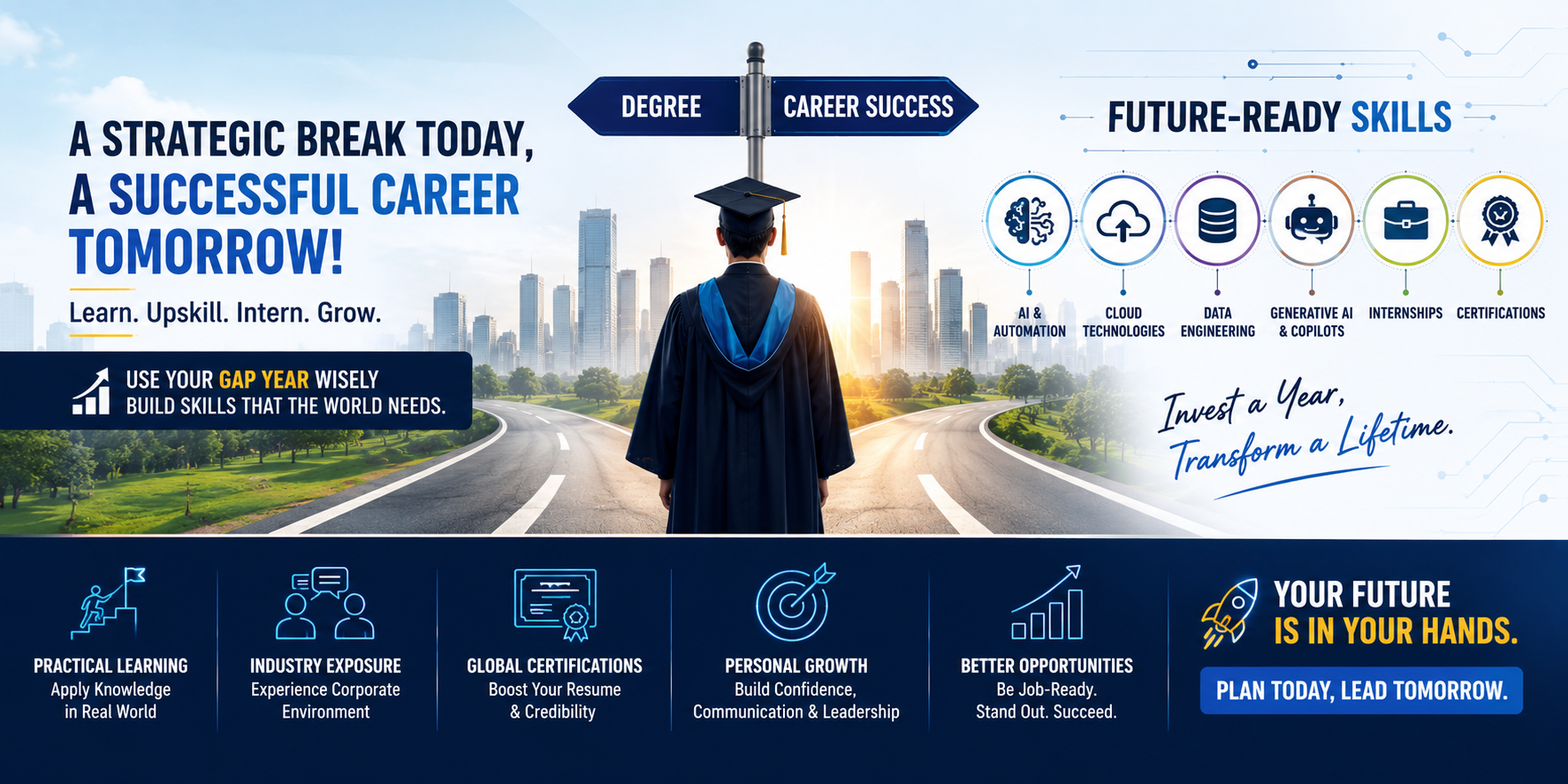
Post-Graduation Strategy @ Blore.AI
Bridging the Gap Between Degree and Career Success
After completing a professional degree such as Engineering, Management, Architecture, or any other professional program, every student faces a crucial question: "What should I do next?"
Many graduates rush to accept the first job opportunity that comes their way, while others choose to take some time off and relax. However, there is a highly valuable option that lies between these two extremes—a strategic career break (gap year or short professional break) dedicated to skill development and practical learning. When used wisely, this period can significantly influence the direction of your entire career.
The Industry Reality:
In today's era of Artificial Intelligence (AI) and rapidly evolving technologies, a college degree alone is no longer sufficient. Employers increasingly focus less on academic scores and more on practical capabilities. The key question organizations ask today is: "What enterprise-ready skills can you contribute from day one?"College education primarily focuses on theoretical knowledge. However, corporate environments demand practical problem-solving skills and real-world application of knowledge. Technology evolves faster than most academic curricula can adapt, creating a critical gap. A well-planned career break helps bridge this gap by focusing on high-demand global technologies:
- Cloud Technologies
- Low-Code and No-Code Platforms
- Generative AI
- Business Automation Tools
- Data Technologies
A structured learning path can be divided into three major stages:
Learn how repetitive daily business tasks can be automated using modern AI and workflow tools to improve enterprise productivity.
Gain practical knowledge of AI assistants, chatbots, copilots, and generative AI solutions to integrate seamlessly into business operations.
Data drives decision-making in today's digital economy. Master how to efficiently collect, organize, manage, and analyze large datasets to generate powerful business insights.
No matter how strong your academic knowledge may be, true learning happens when you face real-world business challenges. This makes internships one of the most valuable activities during a post-graduation break.
Students should explore both technical and non-technical roles, including:
- Business Development & Sales
- Customer Success & Client Relationship Management
- Marketing Operations
When selecting an internship, look for organizations that offer:
Compensation creates accountability and helps develop professional work ethics.
Choose companies that encourage ongoing learning rather than assigning repetitive, stagnant tasks.
Internships that support internationally recognized credentials significantly enhance a resume. Focus on certifications related to Microsoft Technologies, OpenAI Technologies, Cloud Platforms, Data Analytics, and specialized AI Solutions.
Digital transformation is no longer limited to IT companies. Every industry is adopting technology-driven processes. Students who combine general digital skills with domain-specific expertise become highly valuable strategic assets.
- Understand customer behavior via analytics
- Automate inventory management
- Improve sales forecasting & CX
- Support initiatives like Digital India
- Deliver tech-driven public services
- Explore public consulting roles
- Optimize modern learning management systems (LMS)
- Drive technology-backed student engagement and administrative efficiency
Skill development is not limited to software or technology; personal and professional growth are equally critical. Many graduates possess strong technical knowledge but struggle during interviews due to weak communication and interpersonal skills.
Learn to write professional emails, deliver impact presentations, and communicate with clients effectively.
Develop the ability to analyze complex situations and think logically under operational pressure.
Organizations heavily value professionals who can collaborate seamlessly with colleagues, take full ownership of responsibilities, and lead projects when required.
Instead of viewing this period as idle time, treat it as a strategic investment. Taking a purposeful break to build capabilities across AI Automation, Applied GenAI, Modern Data Engineering, Corporate Communication, and Global Certifications paves the way for accelerated career growth.
Leave a comment